
Nature Notes – (Re?) Introduction of the White Stork


Recently a White Stork – blue leg ring 38 – spent a few days at Rutland Water. This is a rare species, not to be confused with other large water birds. I have often heard Grey Herons, a widespread British breeding bird, referred to as storks. Unlike the Grey Heron, the White Stork may never have been native to our islands; they have certainly not bred here in living memory – until now.
White Storks have spread north and west in Europe as the climate warms but they do not like sea crossings. Almost all of the European population reach Africa each autumn. Crossing the Mediterranean at either the Strait of Gibraltar or the Bosphorus. When winds are favourable and there are rising warm air currents they soar to considerable height then drift across the sea. A sudden change in the weather can present a challenge leading to some birds failing to make a successful landfall.
In Britain, ‘wild’ birds very occasionally cross the Channel or the North Sea, but not in significant numbers. These birds tend to wander around the country with some possibly finding their way back to the European mainland.
White Stork Project
The White Stork Project has made a case for the “re-introduction” of this bird as a breeding bird. Although there is no strong evidence that this species was ever a British species. Projects in the south of England have not to date needed a licence to release ringed birds. However, this seems set to be changed. Whilst a few White Storks have fledged successfully from nests near the release site in the south east their future in this country is uncertain. They are stately and beautiful birds that often live alongside people in villages and even cities. However most ornithologists consider that endangered species should be a higher priority for captive breeding/release.
Questions remain about what will become of these birds when we next have a severe winter. As they feed in shallow water and in open fields they will need a strategy if they are not to starve when the ground is frozen. If they were to try to reach Africa each winter, might four perilous sea crossings each year be beyond many of them?
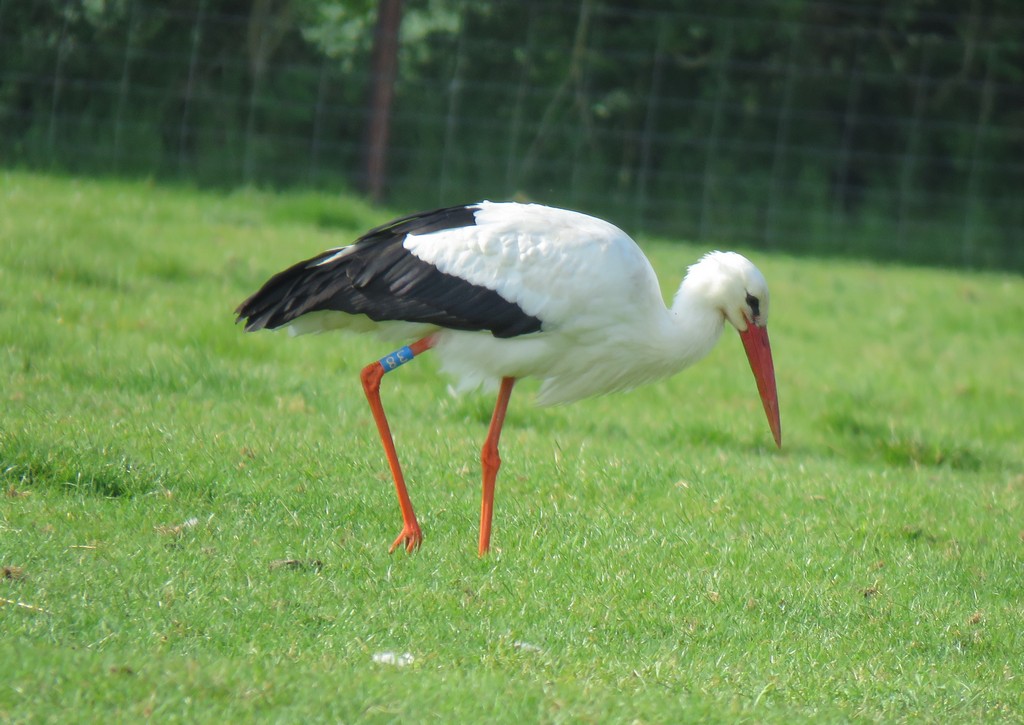
The photograph above is of the Rutland Water bird. This came from a release site in the south west of England and is therefore not one of the birds from a ‘wild’ breeding pair.
David Scott
 The biggest event ever… is coming to Billesdon. Can you believe it?