
Nature Notes


Beet Armyworms on the March
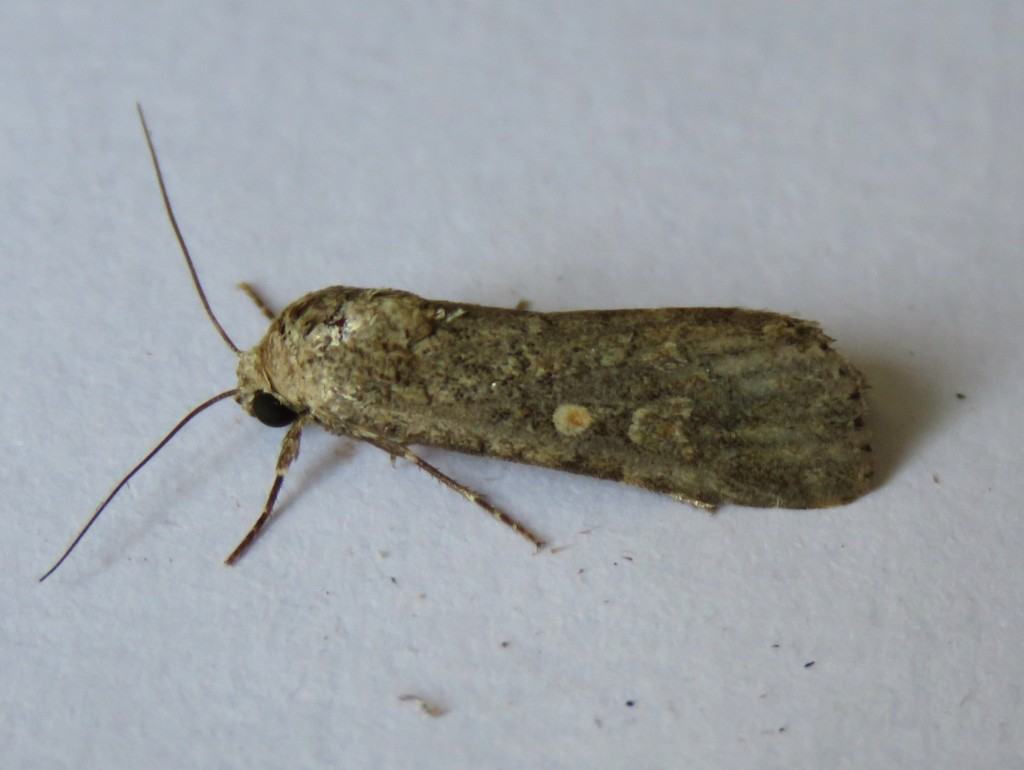
Most moths have an English name and a Latin name; the latter based on scientific classification. This month’s subject has an extra English name so it is known as Small Mottled Willow, Beet Armyworm or Spodoptera exigua. Its larvae, an agricultural pest, have also been given a name ‘asparagus fern caterpillars’ and other less polite names by growers. Some of our moths are very colourful and photogenic. This species is unspectacular in appearance but readily identified by the pale brown spot on its otherwise grey wings.
Origins and distribution
Originally an Asian species, it long ago slipped through biological controls and now has a worldwide distribution. To date it has been unable to withstand our winter climate and appears in the UK as a ‘drift’ migrant from Europe especially in hot summers. Until very recently it was an unusual species to encounter in Leicestershire and Rutland.
The effects of climate
As many of you know, adult moths have no mouthparts and it is the voracious larvae of moths that eat, mainly, vegetation and occasionally, fibres. Where this moth occurs, its larvae can cause significant damage. Sugar Beet and Maize are two of the most affected crops, in counties in the east and south east of England.
The unprecedented heat this summer and associated southerly winds have contributed to the appearance in England of unusually high numbers of some insects. You may well have seen more Painted Lady and Red Admiral butterflies than you usually expect and possibly even a Clouded Yellow. If you have plants such as Honeysuckle or Valerian in your garden you will almost certainly have seen Hummingbird Hawk Moths probing for nectar. In the case of Small Mottled Willow the numbers locally have been staggering.
Numbers
In 2025, the mothing community in Leicestershire and Rutland reported a record high total of 32 of these moths across the whole year. The moth in the photograph was one of ten in a trap at Rutland Water on 25 August. In just three traps that I know of, well over 300 of these moths have occurred already this year. The annual total across the two counties is going to be extremely high, and nationally the numbers will be incredible. I recently met a student who had been operating a moth trap in Cornwall earlier in the summer. He had recorded in excess of 1000 Small Mottled Willows by mid July!
Impact
New species can cause particular harm as they do not bring with them their natural predators. Hopefully some of our birds and small mammals will quickly learn to add these larvae to their diet but in the meantime the damage to crops is of concern to growers.
David Scott
 It’s Time for You Again!