
Inequality in a Just World


A well researched bias in thinking, that to a greater or lesser extent many people hold, is known as the just world hypothesis. It links to ideas like karma and sayings like “what goes around comes around.” Essentially, it is the belief that people get what they deserve. Such thinking can help to give life meaning, it can help us to cope with hardship, it can promote prosocial behaviour, and we might feel a bit better if we believe those who wrong us will get theirs one day. It can encourage the belief that those (including ourselves) who are doing nicely must deserve to. It can encourage the glorification of leaders or those perceived as successful, and it can promote trust where none is due.
The preservation of inequality
It can also help to preserve inequality in unequal societies. This is because it can encourage a tendency to blame victims (and that can also include ourselves) for any abuse or misfortune they suffer. They must somehow deserve it. So we may belittle claims made about injustice and discrimination. If poor people and rich people are getting what they deserve and deserve what they get there is no moral case to change anything.
Our beliefs are a part of our identity, so beliefs that challenge ours can make us feel uncomfortable. We often prefer to discuss our beliefs with people who share them. We may dismiss or distort beliefs that challenge our own. Still, it takes some distorting to fit many reports about UK inequality into the notion of a just world.
UK inequalities
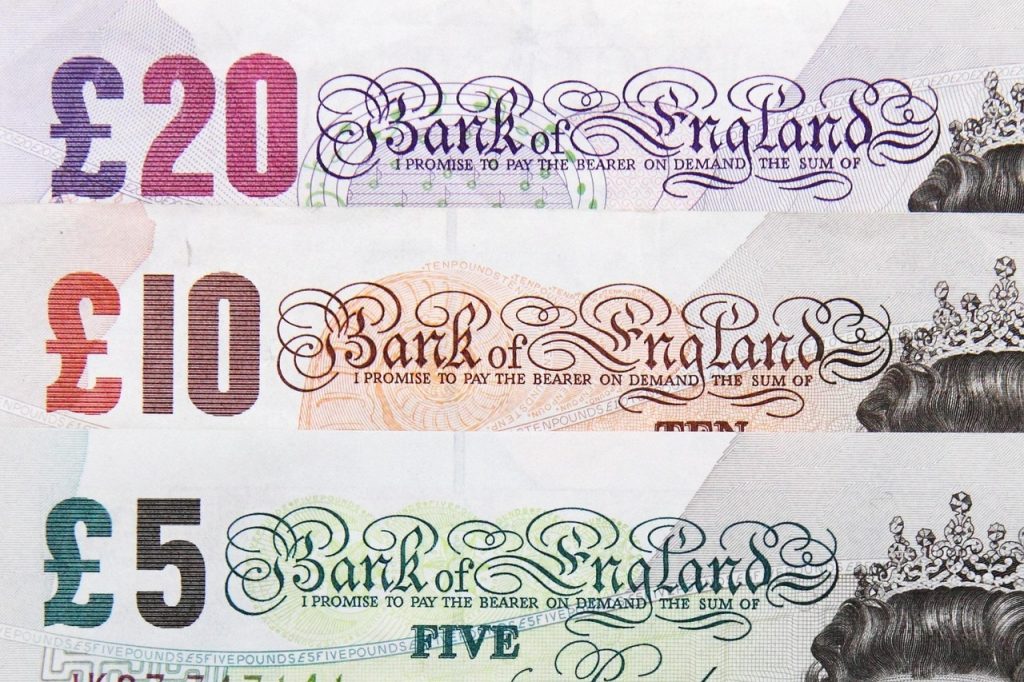
These include:
House prices average nine times average yearly income and have not been so unaffordable since 1876. Half of 18-29 year olds are living with their parents. People renting privately spend a third of their income on housing, much of which is poor quality. Almost 300,000 households are homeless. Average student debt is over £44,000. Nearly two million pensioners are living in poverty. 31% of children are living in poverty, 72% of which are in working families. 4.7 million disabled people live in poverty. Over 7 million families are going without essentials like food, heating, and basic toiletries.
And, by contrast, UK billionaires are collectively worth almost £620 billion. It can be difficult to grasp how rich billionaires are. Some perspective might come from considering that a million seconds is about 11½ days, and a billion seconds is over 31½ years. The richest 50 families in the UK have more wealth than half of the entire population (over 34 million people).
Reduction of poverty
Many modern economists insist the government can always find money to reduce poverty. Accordingly, just as commercial banks create money when making loans, so the Bank of England creates money for government spending. Repaying a loan cancels both overdraft and money (basic double-entry bookkeeping), and tax repays the government overdraft. Tax, then, does not fund the government. Tax destroys money. Balancing the books makes us collectively poorer. Since the government owns the bank, and you can’t owe yourself money, the untaxed money remaining in the economy could remain as an overdraft with the bank.
But convention is that the government sells bonds to cover the deficit. This is called government borrowing, a scary, misleading term. Bonds don’t fund government spending. The wealthy buy bonds with money the government has already created, knowing it can always create more to pay the interest due (easy profits). Bonds do tie up private money that could be spent elsewhere in the economy, so both tax and bonds are important for controlling inflation. But the government can’t run out of money. It literally makes the stuff.
Making money
Interestingly, perhaps, propaganda is spread by repeating simple messages and silencing opposing views. There’s no such thing as government money, and there’s no magic money tree, are widely repeated messages. We hear political interviewers asking where’s the money coming from? We rarely hear those economists who explain that cutting government spending reduces the money supply which stifles investment and increases inequality.
Research in 2017 found that 85% of MPs don’t understand how banks create money. The Bank of England reported in 2014 that economics textbooks get this wrong, so those who have studied them may do too, including those in the Office for Budget Responsibility, the Institute for Fiscal Studies and Rachel Reeves (who got her Master’s degree in economics in 2004 at the London School of Economics). Modern economists explain that the government does not borrow money. Counterintuitively, perhaps, government spending creates money. Inflation is an economic threat, reducing inequality isn’t.
The just world hypothesis may support those clamouring for further spending and welfare cuts, or those who stigmatise the poor and vulnerable. But it is our government, our bank, and our money. The government’s job is to make and invest it on our behalf. The world may never be just, but that doesn’t mean we can’t try, or can’t afford, to make it fairer.
Larry Dolan
Ref: https://www.taxresearch.org.uk/Blog/2025/11/26/modern-monetary-theory-mythology-and-a-glossary-update/
 Kibworth Community Library – Dec 2025